
 English
 Chinese
 French
 German
 Russian
 Italy
 Spain
 Portugal
 Japanese
 Korean
 Arabic
 Traditional
Animal ART Technology
Swine Pig Boar Breeding Reproductive Technology

Swine Pig Boar Breeding Reproductive Technology
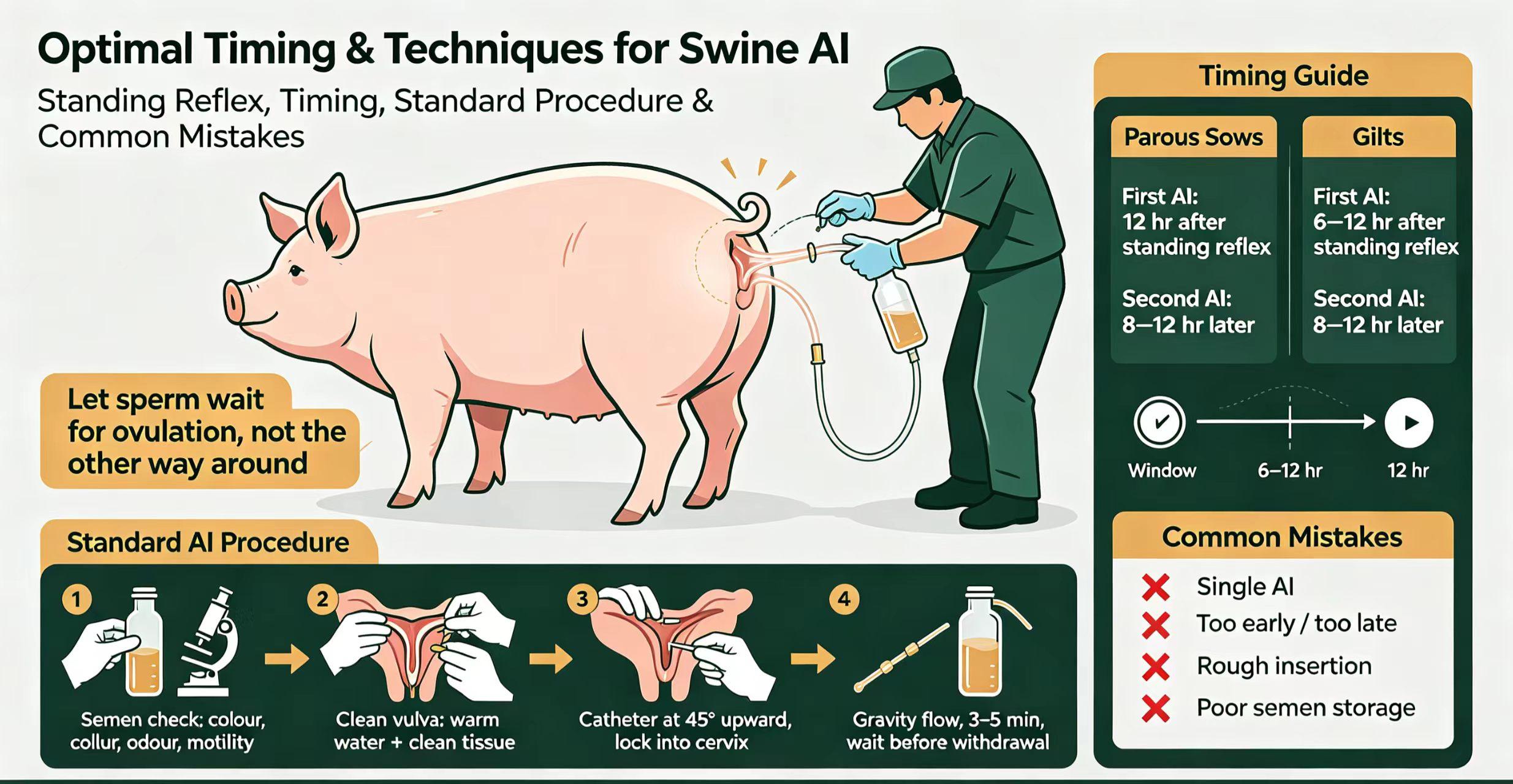
How to identify the optimal timing for swine artificial insemination?
This article will covers sow estrus diagnosis, insemination timing, step‑by‑step AI techniques and boar semen handling tips. Help commercial and small‑scale pig farms boost sow conception rate and lower open‑sow rate.
1. Optimal Timing for Swine Artificial Insemination
Estrus identification and correct insemination timing determine AI success. Sperm survive 24‑48 hours in the sow reproductive tract, while oocytes remain fertile for only 6‑12 hours after ovulation. The core principle: let sperm wait for ovulation, rather than inseminating after ovulation occurs.
1.1 Insemination timing for different sows
1. Parous sows
Once the standing reflex is observed (sow stays still and arches back under back‑pressure), perform the first insemination after 12 hours. Carry out the second insemination at an interval of 8‑12 hours.
Example: Standing reflex detected in the morning → first insemination in the evening; second insemination next morning.
2. Gilts
Gilts have shorter estrus duration and earlier ovulation. Complete the first insemination 6‑12 hours after standing reflex appears, followed by a second insemination after 8‑12 hours.
Practical rule: Delay slightly for parous sows, inseminate earlier for gilts; double insemination is strongly recommended.
1.2 Visual estrus signs (auxiliary reference only)
- Vulva changes: Swelling fades from bright red to dark red with folds; mucus turns thin to thick and stringy.
- Behaviour: Mounting pen‑mates, remains still when approached.
Important note: Vulva appearance alone is unreliable. Standing reflex is the key criterion for estrus confirmation.
1.3 Seasonal influences
Under high summer temperatures, estrus shortens and ovulation occurs earlier. Increase oestrus‑check frequency and advance insemination appropriately. In winter, oestrus lasts longer; avoid premature insemination which causes premature sperm ageing and loss of activity.
2. Standard Operating Techniques for Swine Artificial Insemination
2.1 Pre‑insemination preparation
1. Semen inspection: Check semen colour and odour before use; evaluate sperm motility. For 17 °C stored liquid semen, let it rest and return to ambient temperature on‑site. Avoid rapid temperature rise or freezing. Discard poor‑quality semen directly.(internal link:boar semen extender powder, 17℃ semen storage incubator)
2. Sow vulva sanitation: Clean external vulva with warm water and clean paper tissue, wipe from inside out. Do not flush inside the vagina.
3. Consumables preparation: Disposable insemination catheters and insemination bottles. Foam‑tipped catheters are recommended to reduce reproductive tract injury.(internal link:disposable swine insemination catheters)
2.2 Step‑by‑step insemination procedure
1. Apply a small amount of lubricant to the catheter. Insert at a 45° upward oblique angle. Advance gently through the vagina until locked within cervical folds. Light backward pulling creates resistance, confirming correct position.
Never force insertion to prevent cervical laceration and reproductive inflammation.
2. Connect the insemination bottle. Elevate the bottle and let semen flow in by gravity. Do NOT squeeze the bottle forcibly. Forced injection leads to semen back‑flow and uterine stress.
3. Insemination duration: 3‑5 minutes per sow. Apply back‑pressure or stimulate mammary glands during insemination to mimic boar stimulation and promote uterine contraction for semen uptake.
4. Do not pull out the catheter immediately after finishing. Leave it in place for 3‑5 minutes, rotate slowly when withdrawing to avoid semen back‑flow.
2.3 Post‑insemination management
Avoid driving sows roughly or pen washing right after AI to reduce stress. The first three weeks post‑insemination are critical for embryo implantation. Minimise pen movement, fighting and extreme temperature stress.
3. Common Mistakes Reducing AI Results
1. Single‑dose insemination: Higher risk of open sows. Double insemination is preferred for commercial farms.
2. Too‑early insemination: Sperm lose vitality before ovulation. Too‑late insemination: aged oocytes fail fertilisation.
3. Rough operation: Causes uterine damage and metritis, resulting in repeat‑breeding sows.
4. Improper semen storage: Temperature fluctuation rapidly reduces sperm motility, negating correct operating practice.
Keys to successful swine artificial insemination: Accurate oestrus detection via standing reflex, precise insemination window, gentle standard operation and guaranteed semen quality. Match proper timing with qualified AI consumables and semen storage solutions to improve sow conception rate, increase litter size and cut economic losses from open sows.
swine artificial insemination optimal timing naturally appears 3‑5 times, long‑tail keywords distributed across paragraphs. Short paragraphs for search‑engine indexing. Suggest images: standing reflex demonstration, swine AI operation diagram. Image alt tag: swine artificial insemination operation.
Previous:Detailed Explanation of Artificial Insemination Techniques for Breeding Boars
Next :Last
Swine Pig Boar Breeding Reproductive Solution
Bovine Bull Assisted Reproduction Breeding
Equine Reproductive Artifcial Insemination
OVINE/CAPRINE Breeding Reproduction Solutions
13509905234
+0755 25114
info@aispermanalysis.com
No.22 Jingxiu East Road,Life Science Park, Pingshan District,Shenzhen City,China
Copyright © 2015 aispermanalysis.com All rights reserved. Zhan Jiang AI SHEN SI Technology Co.,Ltd
